
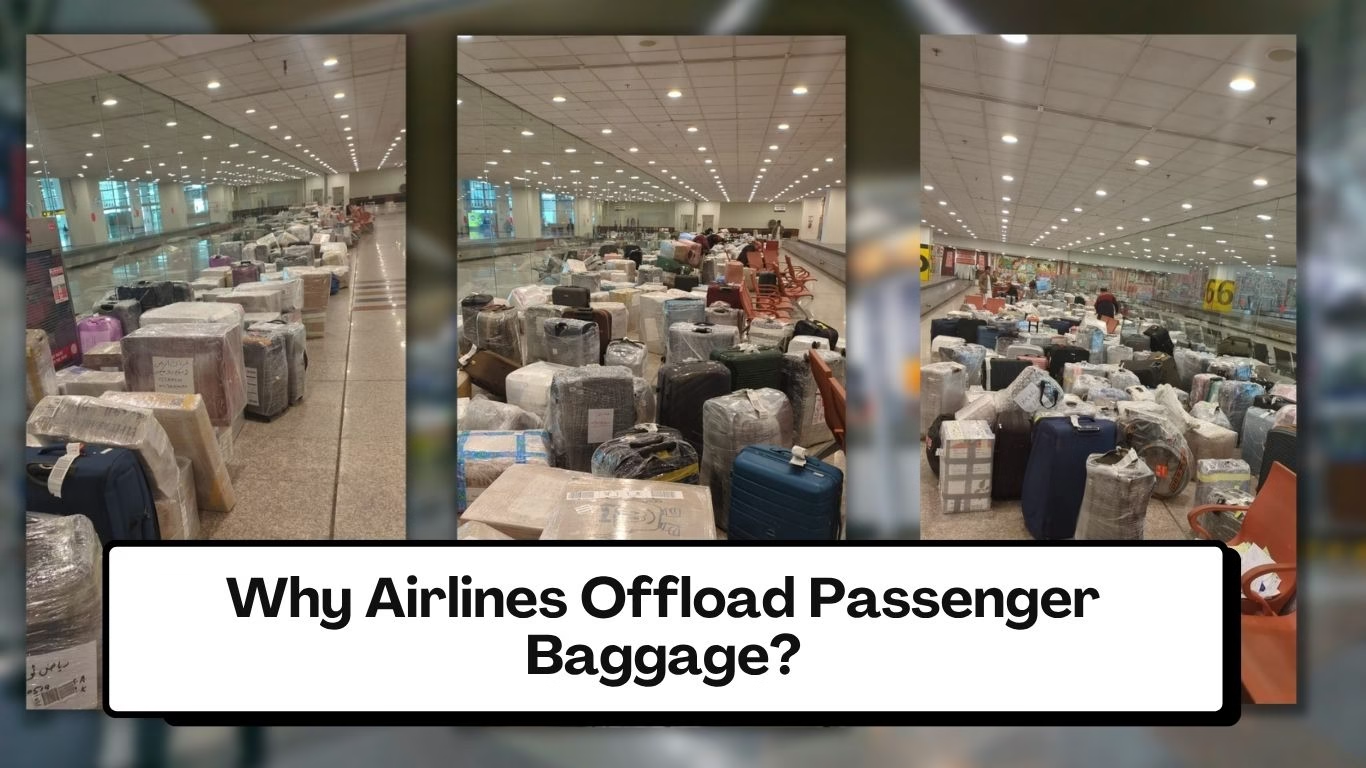
Imagine you are coming home on a flight with all the gifts you have bought for your loved ones in your checked-in baggage. The whole flight runs smoothly and comfortably until you reach the arrival hall, where you have to collect your baggage, and the airline staff tells you that it was offloaded and will arrive on the next available flight. Imagine someone has a wedding, and all the wedding clothes and items are in that baggage, which the airline offloaded at the origin. Let’s suppose an army officer is having a meeting at his headquarters, and his uniform is the baggage that was offloaded. These are some of the scenarios, but every passenger has their own story to tell when their baggage did not arrive at their destination. Here are some reasons why airlines offload passenger baggage.
Reasons Airlines Offload Passenger Baggage?
- Aircraft Weight Limitation
- Aircraft Space Issue
- Low-Cost Carrier
- Due to security reasons
- Dangerous Goods in the Baggage
- Baggage Vibrates
- Pending Transit Baggage Payment
- ODD Size Baggage
- Baggage stuck at Segregation Belt
- Baggage Tag Error
Aircraft Weight Limitation
In an aircraft, there are total 3 weight limitations, which include:
- Maximum Zero Fuel Weight
- Max Take Off Weight
- Max Landing Weight
The total flight payload, which includes passenger weight, baggage weight, and cargo weight, should not exceed the aircraft’s maximum weight limitations. It is the responsibility of the Load Controller to keep the weight within the aircraft’s maximum performance limitations. If the weight exceeded, then the load controller first offloaded cargo, then passenger baggage, until the total payload fell under the aircraft’s performance limitations.
Low-Cost Carrier
Weight limitation commonly occurs in low-cost airlines as they usually operate Airbus A320 or Boeing 737 on 5-6 hour flights. The pilot has to uplift more fuel while operating on a longer route, which limits the payload factor. That results in the offloading of passenger baggage.
Aircraft Space Issue
The Airbus A320 or Boeing 737 has a baggage capacity of around 230-260 pcs in its holds. If the baggage pieces exceed on any flight and the holds are full, then the airline offloads baggage and plans on the next flight or requests other airlines to carry their baggage. That is why airline usaually charge per baggage piece and allow only 1 checked baggage on a normal ticket.
Passenger usaually bring a square-sized carton which does not fully utilize the space in the aircraft hold due to the fuselage structure that results in offloading.
Due to a Security Reasons
Passenger baggage is being scanned at every step until it gets loaded onto the aircraft. Most of the passengers’ things that passed initial security, if the scanner or security staff didn’t stop them, it means that they are clear, but this is not the case. When the counter staff check in your baggage and send it toward the segregation through belt, a second screening is also performed. Sometimes the security staff calls the passenger for clarifications/investigation. If anything suspicious is found in the baggage, they will hold that baggage and refuse to load it on the flight.
Dangerous Goods in the Baggage
Passengers are not aware of the items that are forbidden on flights, as they fall under the category of dangerous goods. Such as a power bank, perfumes, oil, battery, shampoos, etc. If the passenger is carrying such types of items in the baggage, then the airline offloads the baggage.
Baggage Vibrates
If there is vibration coming from the baggage, and the loading staff feels it, then that baggage will get offloaded from the flight. The security scanner will also detect the vibration, and eventually, the baggage will be held. Therefore, always disconnect the battery from the machine, toys, or items that will cause vibration.
Read More About: Things to do when Airline Offload Passenger Baggage
Pending Transit Baggage Payment
Most of the connecting flight baggage doesn’t arrive at the destination, and it commonly happens when there are two different airlines. This is due to a pending transit baggage payment. While obtaining the boarding card for the second flight, make sure to ask if there are any transit baggage charges.
ODD Size Baggage
Odd-sized baggage commonly includes a wheelchair, strollers, sticks, or any baggage that is not suitable to pass through the scanner. The final decision lies with the security staff; if they refuse it, then the baggage will be offloaded from the flight. Having proper packing of the ODD-sized baggage would decrease the chances of refusal from the security.
Baggage stuck at Segregation Belt
When passenger check in their baggage at the counter, it goes through the segregation belt. Sometimes baggage gets stuck on the belt and cannot reach the segregation staff in time. Always have a good wrap and don’t check in baggage with less than 5 kg weight to keep baggage from getting stuck in the belt.
Baggage Tag Error
Sometimes the counter staff forgets to tag the baggage, or the baggage tag gets removed while passing through the segregation, or the barcode of the tag gives an error to the segregation staff while scanning, which would result in the offloading of baggage.





Leave a Reply