

Air travel looks simple from the outside: book a ticket, show up at the airport, board the plane, but most passengers who run into trouble at the airport aren’t unlucky; they’re unprepared. Passengers are not aware of the procedures and dynamics of airports that not only leads to making their air travel stressful, but they also incur financial loss.
Some of the common mistakes passengers make every day are:
- Arriving late at airline check-in counters
- Packing extra while ignoring baggage allowance
- Packing liquids and electronics incorrectly
- Not checking passport and visa validity
- Relying entirely on phone boarding passes
- Not confirming terminal and gate changes
- Overlooking layover connection times
- Not declaring currency or restricted items
- Forgetting to reconfirm special requests
- Traveling while having medical conditions (pregnancy, surgery, etc.)
1. Arriving Late at Airline Check-in Counters
Airlines close check-in counters well before departure to avoid delays. On every ticket, airlines clearly mention the reporting time for each flight. Usually, airlines close their check-in counters 45 to 60 minutes before domestic flights and up to 90 minutes before international flights. This means that to board the aircraft, you have to obtain your boarding pass before airlines close their check-in counters.
One of the main reasons passengers arrive late for check-in is heavy congestion at the initial security point during peak hours, when multiple flights depart at the same time.
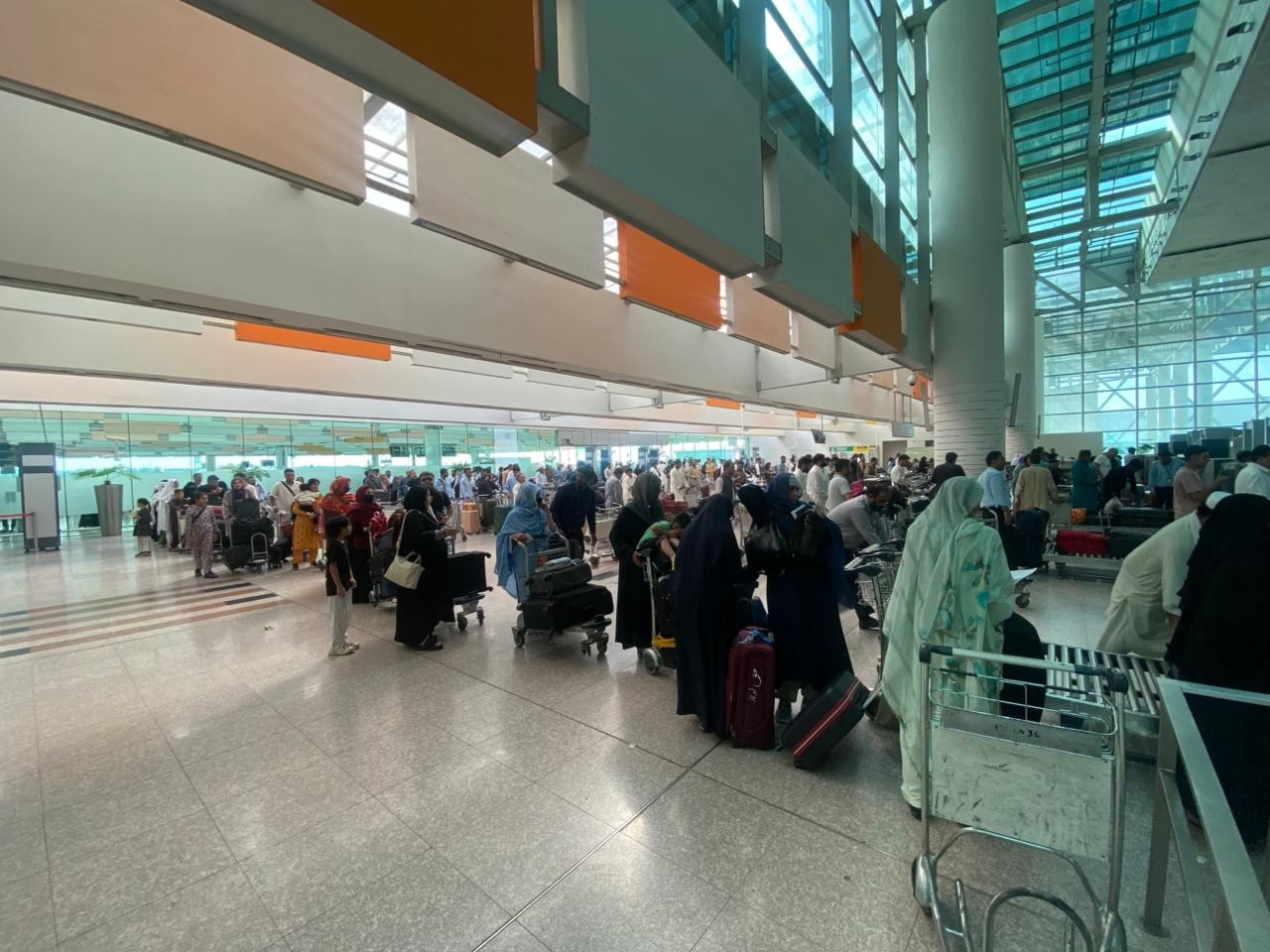
During peak hours, the combined time spent clearing the initial security check, ASF screening, Customs, and ANF can stretch to 1 to 2 hours. Passengers who don’t account for this often find themselves rushing — or missing check-in entirely — even when they thought they left home with plenty of time to spare.
Sometimes, even if you arrive on time, the airline may deny your check-in due to overbooking — all the seats may already be gone. This is why it’s important to reach the check-in counter well before everyone else. Check-in counters usually open 4 to 5 hours before departure for international flights, and 2 to 3 hours before departure for domestic flights — reaching early gives you a much better chance of securing your seat before the flight fills up.
Read More About: How Early You Should Report at the Airport in Pakistan
2. Ignoring Baggage Allowance Until the Airport
Passengers who are unaware of their baggage allowance often end up carrying excess weight, which causes problems and delays during check-in. When this happens, they’re left with two options: pay an extra fee for the excess weight, or remove items from their baggage on the spot to bring it within the limit.
Every airline has its own baggage policy; some charge per piece, others charge per kilogram — and these details are clearly listed in the terms and conditions section of your ticket. It’s important to read them in advance, because a passenger will not be issued a boarding pass until any excess weight is adjusted or paid for.
Excess baggage fees paid at the counter are almost always higher than paying for extra baggage online in advance. To avoid this:
- Weigh your bags at home before leaving
- Check your fare tier’s exact baggage allowance ahead of time
- If you’re likely to go over the limit, add extra baggage through the airline’s website in advance
3. Packing Liquids and Electronics Incorrectly
Many passengers unknowingly pack items that airlines restrict or prohibit, which can lead to their baggage being offloaded or held back at check-in.
Zam Zam water and oil products such as olive oil, along with shampoos, are not allowed in large quantities in checked baggage. Perfumes, body sprays, and room air fresheners also fall under restricted categories and must stay within permitted limits.
Read More About: 10 Reasons Why Airlines Offload Passenger Baggage?
Battery-powered items and power banks are not allowed in checked luggage at all — they must be carried in the cabin. As a general rule, batteries should not exceed 100Wh or 12V, but this varies by item and airline. Always check with your airline before packing anything that falls under the Dangerous Goods Regulations (DGR) category.
Forgotten liquids over 100ml and laptops buried at the bottom of a bag are also common causes of security delays. Keep liquids in a clear, resealable pouch, and keep laptops or tablets in an easily accessible pocket — it speeds up the screening process and helps avoid your bag being pulled for a manual check.
4. Not Checking Passport and Visa Validity Early
Many passengers who come to Pakistan on work holidays book their return ticket right on the expiry date of their visa or work permit. This is risky — if the flight is delayed or cancelled, it can lead to financial loss and unnecessary mental stress. Always keep a margin of at least 2-3 days before your visa or document expiry when booking your return ticket.
Passengers also frequently forget to carry a hard copy of their visa, which can delay the boarding process at the counter. In some cases, travel agents change the ticket’s PNR without informing the passenger, and a mismatch in PNR numbers at check-in becomes a problem of its own. Always get a fresh, confirmed copy of your ticket from your agent, or have the airline’s ticketing office reissue one. You can also verify your booking directly on the airline’s website before heading to the airport.
Another common mistake is forgetting a valid passport at home simply because it wasn’t checked before leaving for the airport. Even passengers who live close to the airport will miss their flight if they arrive late at the counter to sort this out. Keeping all required travel documents ready — in both soft and hard copy — makes the entire airport journey far smoother.
Many countries also require a passport to be valid for six months beyond the travel date, and visa processing can take days or weeks depending on the destination. Checking this the night before is a common and costly mistake. Verify passport expiry and visa requirements as soon as the trip is booked, not after.
5. Relying Entirely on Phone Boarding Passes
In Pakistan, airlines are gradually shifting toward web check-in, but not all airlines or airport authorities have fully adopted the policies and procedures needed to support it. Even with a mobile boarding pass saved on your phone, passengers are often still required to appear at the airline’s check-in counter before proceeding further.
A mobile boarding pass is convenient until a phone battery dies or connectivity drops in a terminal with a weak signal. Keeping a screenshot saved offline, or a printed copy as backup, avoids an unnecessary scramble at the gate.
6. Not Confirming Terminal and Gate Changes
A large number of passengers get offloaded simply because they don’t arrive at their assigned boarding gate on time. Airlines typically close the boarding gate around 20 minutes before departure, and once you’re offloaded, the full cost of your ticket is lost.
So once you’ve been handed your boarding pass, your next priority should be reaching the boarding gate at least 30-45 minutes before departure, and confirming you’re sitting at the correct gate.
Large airports often have multiple terminals, and gates often change at the last moment. Passengers who aren’t alert during the final hour before their flight can find it difficult to reach the boarding gate on time. Some passengers even fall asleep at the gate and end up missing their flight entirely. Not rechecking your flight status after arriving at the airport can also lead to walking to the wrong terminal altogether.
7. Overlooking Layover Connection Times
Whenever your first flight gets delayed, and you have a connecting flight to catch, quickly assess whether your layover is long enough to make it still. If it is, you may be fine — but if it isn’t, change your ticket to an alternative flight immediately rather than risk missing your next flight altogether.
Passengers face a lot of missed connections because they don’t plan for delays. Always have a backup travel option in mind whenever you’re booking a connecting flight — it saves time and makes the whole journey far less stressful if something goes wrong.
There’s also the self-transfer option to be aware of, where the passenger is responsible for clearing immigration, collecting baggage from the arrivals lounge, then heading to departures to get the boarding pass for the next flight and re-submitting their baggage. If your booking isn’t self-transfer, it’s the airline’s responsibility to transfer your baggage directly to the next carrier — but you should always confirm which type of connection you have.
Short layovers look efficient on paper but can quickly turn into missed connections if the first flight is delayed even slightly, or if the connecting gate is far away in a large hub airport. When booking multi-leg trips, allow a realistic buffer between flights, particularly on international connections that involve re-clearing immigration or security.
8. Not Declaring Currency or Restricted Items
During both departure and arrival, customs officers are present to check baggage for items such as currency, precious stones, gold, LEDs, gaming consoles, mobile phones, and other electronic goods — and import or export duty may be imposed if such items are found undeclared.
In Pakistan, carrying more than USD 5,000 typically requires declaration at the customs counter. Rules vary by destination too — some countries, for example, don’t allow dairy products to be brought in or sold without prior permission.
Many countries have limits on how much cash can be carried without declaration, and customs rules vary widely on food, plants, and other goods. Not knowing these rules in advance can lead to confiscation or fines on arrival. A short check of the destination country’s customs page before you travel avoids this entirely.
9. Forgetting to Reconfirm Special Requests
Many passengers ask their travel agent to book a wheelchair for their flight — and even pay for the service — but still end up waiting and asking around for a wheelchair at the airport because the request never actually went through.
Wheelchair assistance at the airport in Pakistan is provided free of cost. However, if a wheelchair is needed at the destination airport, some airlines may charge a fee for it.
Whenever a passenger requires an extra facility, it’s important to contact the airline directly before booking the ticket, as the airline may not accept certain special-assistance passengers under its own terms and conditions.
10. Traveling while having medical conditions (pregnancy, surgery, etc.)
Passengers traveling with medical conditions — such as pregnancy, a recent surgery, or other health concerns often board without informing the airline in advance, assuming it won’t be an issue. In reality, most airlines require prior medical clearance or documentation for such cases, and failing to provide it can result in the passenger being denied boarding at the counter or gate.
For example, pregnant passengers are usually required to carry a fitness-to-fly certificate from their doctor once they cross a certain number of weeks, and passengers who’ve recently had surgery may need medical clearance confirming they’re fit to travel, especially on long-haul flights. Requirements vary by airline and by condition, so it’s important to check with the airline well before booking — not just before departure.
Informing the airline early also allows them to arrange any assistance needed on the day, such as special seating, priority boarding, or onboard accommodations, so the journey goes smoothly for everyone involved.




Leave a Reply